01
Approved inputs
Raw materials and packaging are received, identified, checked and controlled before production use.
One product, one plant, one chain of custody — from the material that arrives at the gate to the batch number on the drum that leaves it.
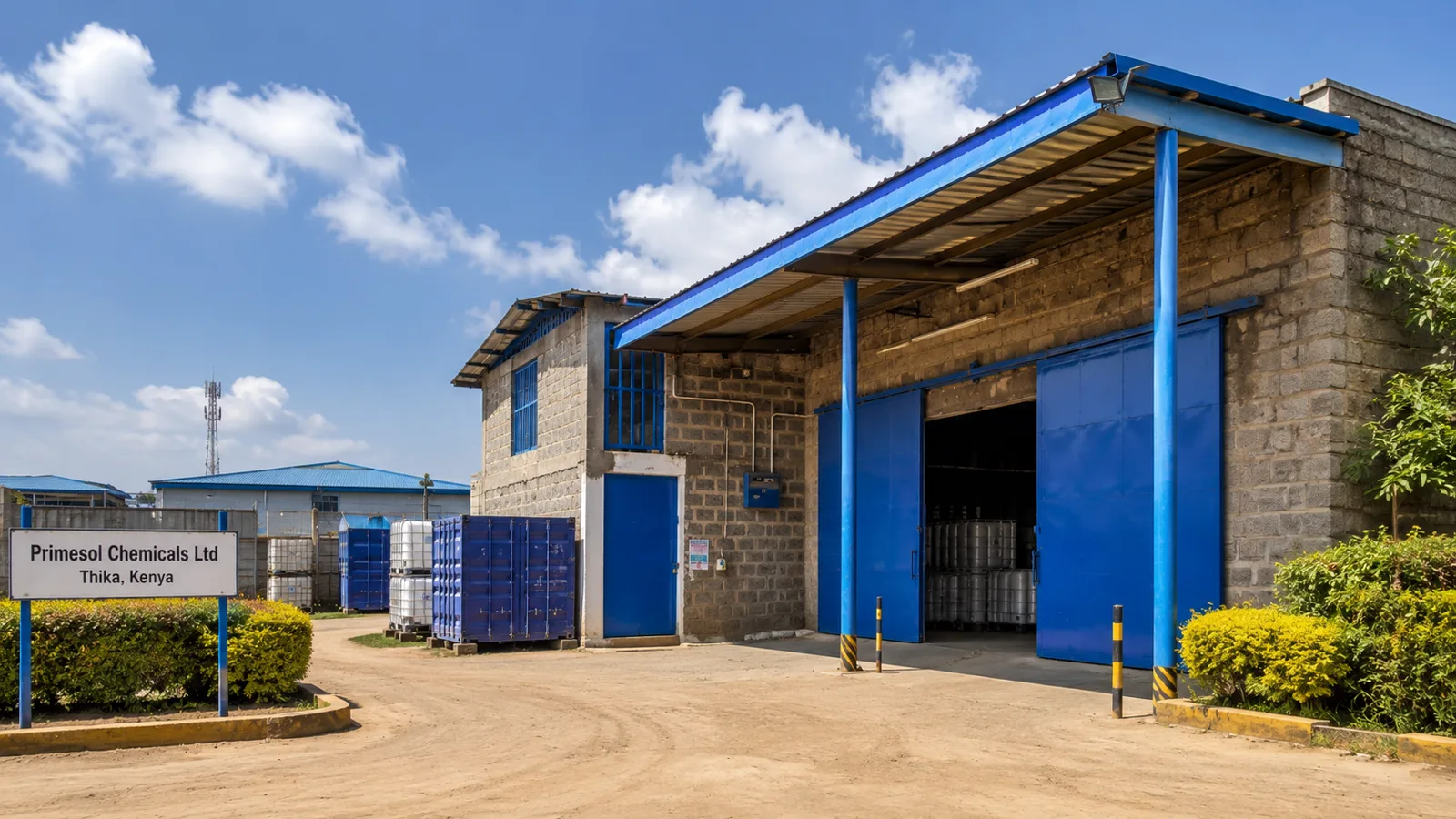
Primesol operates a batch manufacturing system built around four production reactors, dedicated lye preparation, treated-water storage, controlled transfer, product filtration and packing arrangements.
Established international sourcing channels supply the essential production inputs and selected process components the plant runs on.
Six points where a batch is checked, recorded or held. Each one produces a record that stays with the batch through to dispatch.
Raw materials and packaging are received, identified, checked and controlled before production use.
Production is organized through controlled batch records, equipment status and traceable material lots.
Process water is managed through defined storage, monitoring and release controls.
Process information is monitored and recorded throughout manufacturing and transfer activities.
Finished product is sampled and tested using approved laboratory controls before release.
Packaging, labels, quantity and batch status are reviewed before customer dispatch.
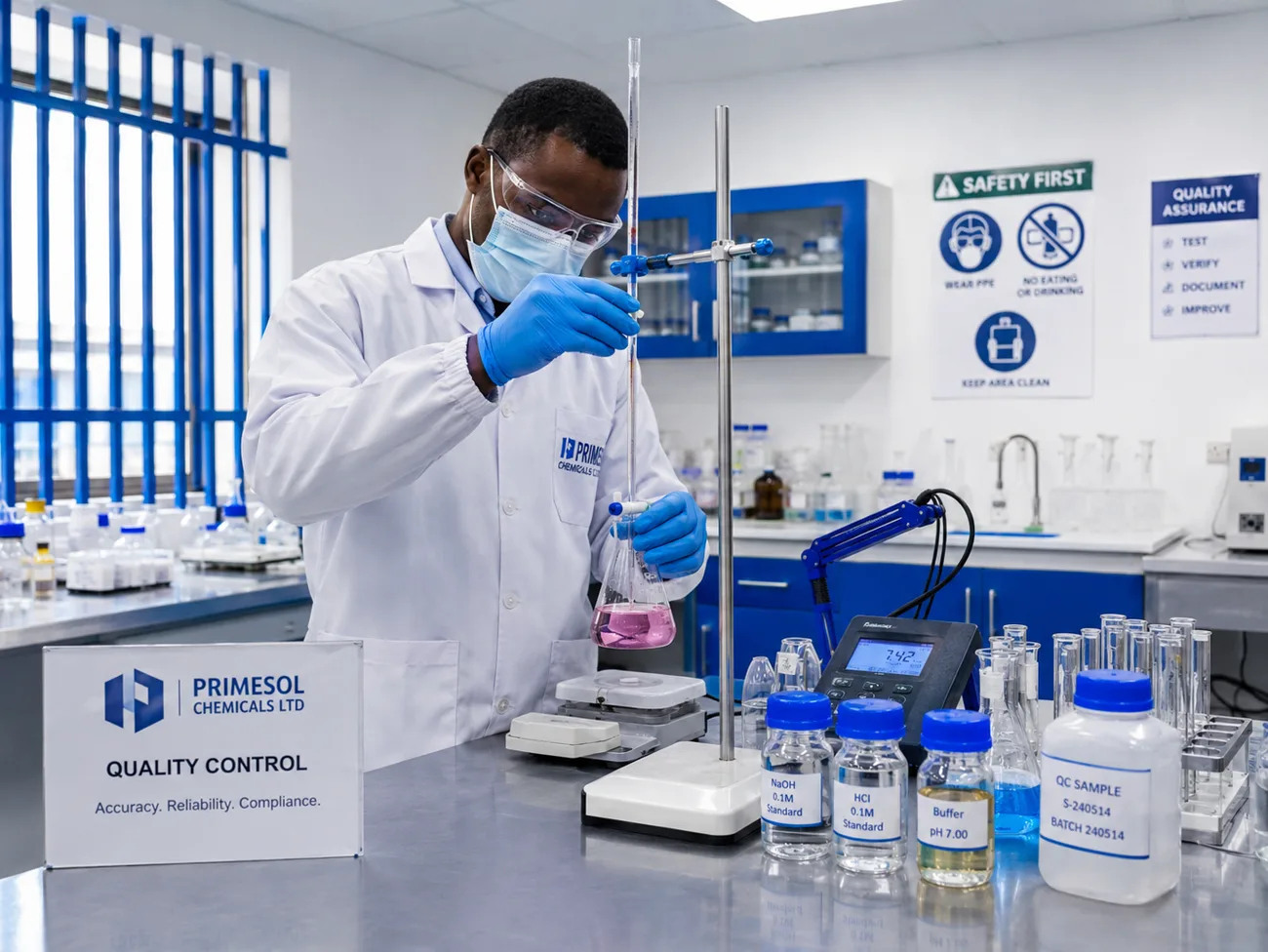
Materials are checked before use, critical process information is recorded during manufacture, and finished product is tested before release. Quality reviews the production and laboratory evidence before authorising dispatch.
Prevention, trained personnel, appropriate PPE, secure storage, controlled transfer, emergency readiness and environmental protection.
Critical tasks are performed by personnel trained and authorized for their responsibilities.
Hazardous operations require defined checks, equipment readiness and clear responsibility.
Communication, evacuation, equipment inspection and response arrangements support safe action.
Waste prevention, release control and responsible disposal form part of operational planning.
Traceable materials, documented batches, approved testing, controlled release and continuous performance review.
Minimize waste, prevent uncontrolled releases, use resources responsibly and work with approved service providers.
Tell us your quantity, packaging preference and delivery location. Our team will respond with the next practical step.